
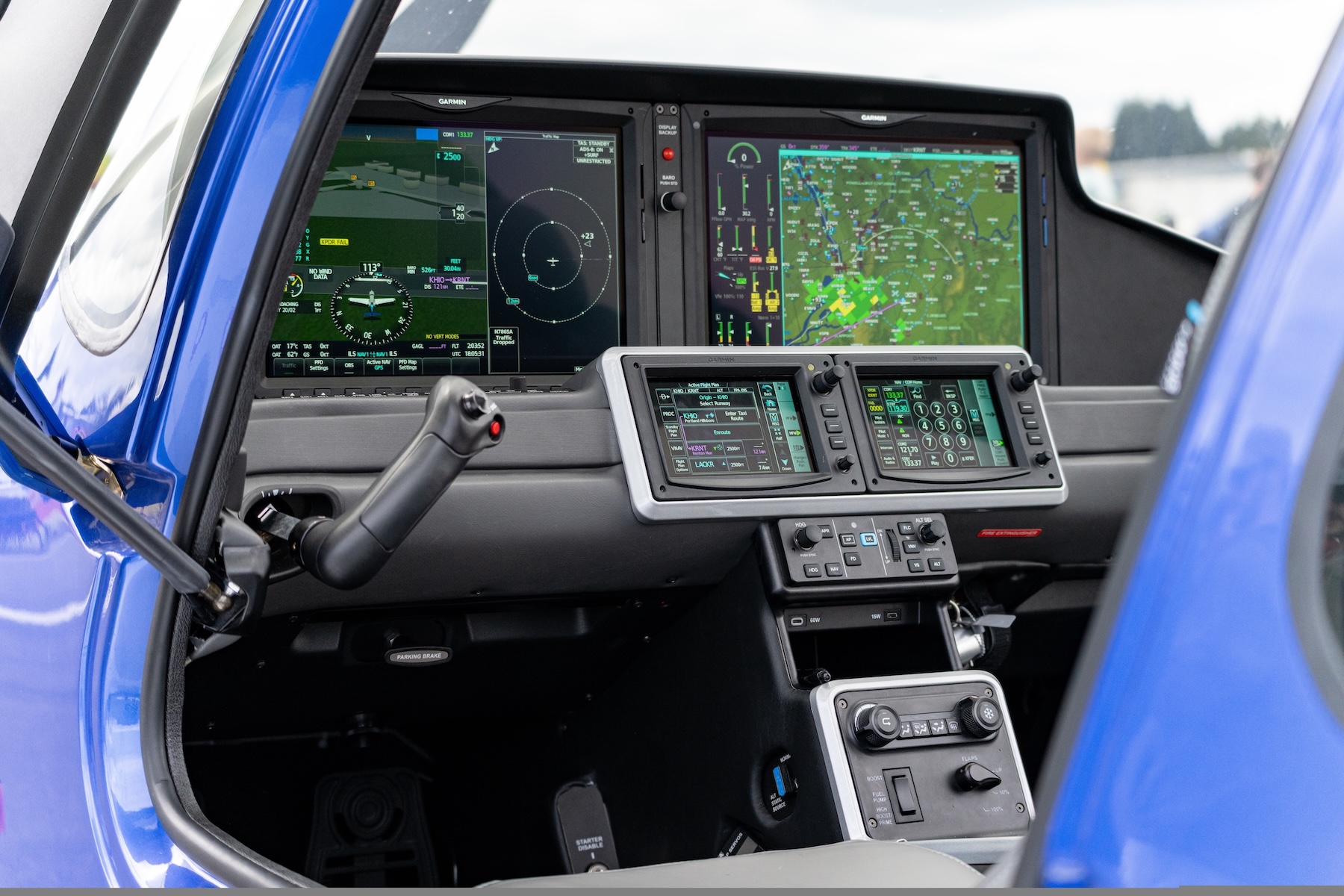
Beyond the aircraft themselves, certain innovations have fundamentally changed the day-to-day work across all professions in General Aviation.
In the cockpit, next-generation avionics including touchscreens, synthetic vision, and ADS-B make flying safer and more intuitive for both seasoned pilots and flight students.
In the hangar, the game is changing just as fast. Technicians and mechanics now work on electric and hybrid propulsion systems, while connected platforms enable remote aircraft diagnostics.
On the design side, engineers are working with innovative new materials. Carbon fiber composites, 3D-printed components, and recyclable or bio-based materials are transforming both aircraft manufacturing and performance.
These advancements are driving a demand for new skills. Flight schools are already seeing instructors and students training on electric aircraft, while advanced simulators and new subjects such as Sustainable Aviation Fuels (SAF) enrich training programs at a time when Europe is actively looking to recruit a high volume of new professionals.
To take it a step further, explore our new technologies page and discover the industry’s latest opportunities in our career tool.

Leave A Comment